
Coming Home
The Odyssey and Diaspora of the Finished Novel, Upcoming Workshop, and the Summer Books That Don’t Waste Words

Dear No Ones,
It has been a busy summer. I hope you have all been finding moments of peace and rest along with the joy (and shade from the heat, good grief, Europe!). After a long period of relentless work and concentration, I am finally resurfacing with a clear mind, a stack of finished books, and some major personal milestones to share.
At the release party for my friend Lauren Collins’s already bestselling book, They Stole a City, I had many conversations with great writers, and I was fortunate to have a moment with Poppy Harlow to discuss the importance of writing and storytelling. She probably didn’t know how much impact her words had on me when she summarized writing by quoting Ram Dass. In the end, she said, “We are walking each other home.”
Those words resonated deeply. Two weeks after our chat, I wrote “the end” to the final draft of my novel, a labor of love that I have been working on for the last five summers and one year of sabbatical.
The Map of a Manuscript
Pamela Druckerman, another brilliant writer I enjoyed spending time with in Paris, recently asked what inspired my novel. It had been so long since I first started that I almost had to pause and think. At its core, the story is about the important Nigerian men in my life who struggled with pride, pain, and the quiet inability to express their vulnerabilities to love, fear, shame, death, and resentment.
The novel is loosely autobiographical. It helped me explore questions of identity, memory, intergenerational trauma, and the complex “in-betweenness” of the immigrant experience that I have had to wrestle with. And while the novel had developed beyond that initial question, it was helpful to remember how it started, when I wondered how the older Nigerian men in my life would face life's questions in those final hours. Poppy’s connection to writing as a reminder that “We are walking each other home” was what made everything click for me. How is my story about home? Going home. Finding home. Being home.
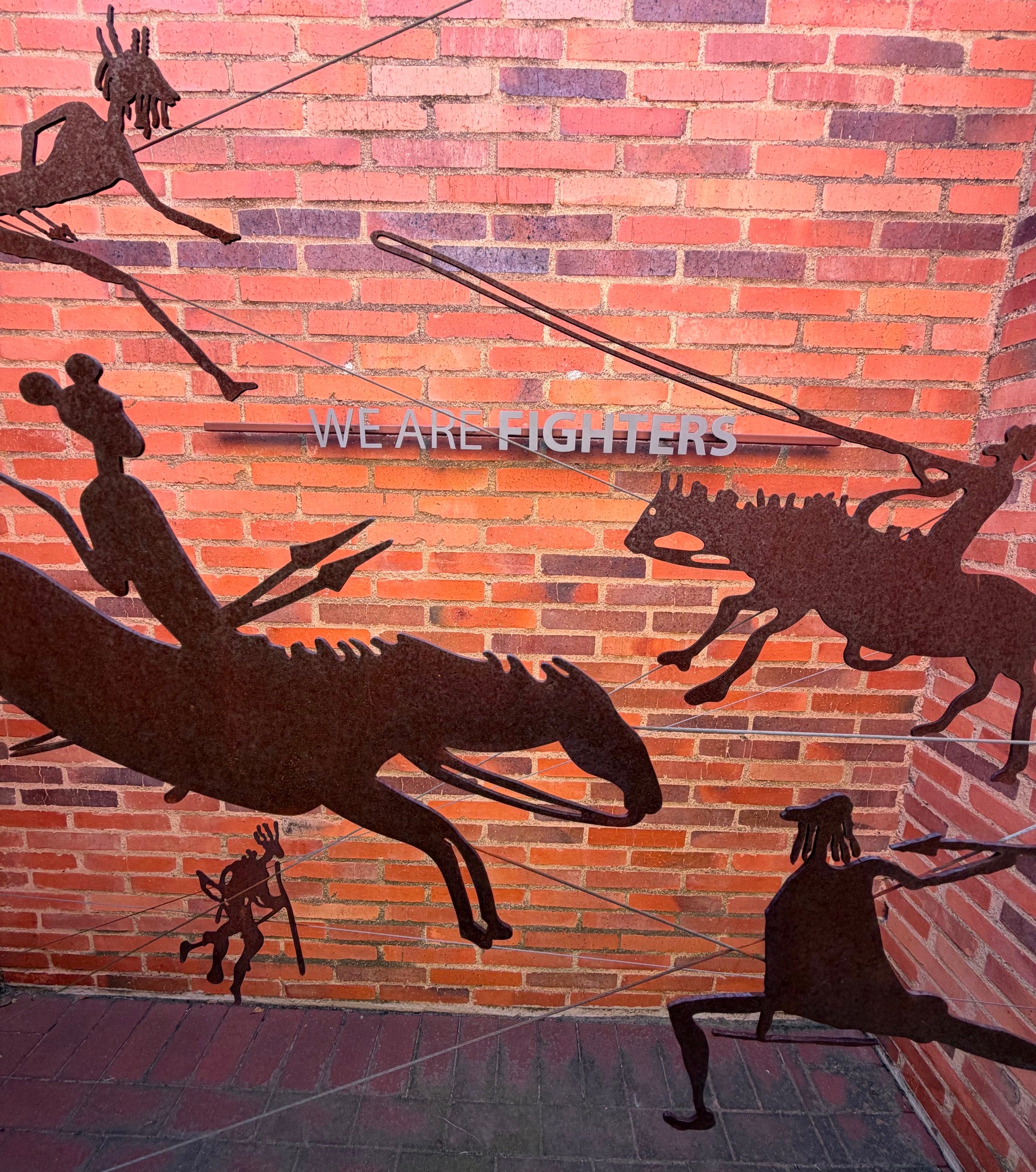
Writing this novel entirely on travel—away from home—helped me place those heavy questions of identity and home in deep relief. Looking back, the manuscript has its own distinct geography:
Impruneta, Tuscany: Where the initial spark and idea first came to me, followed by gathering notes and building out timelines.
The South of France (Provence, Aix, Marseille, and Menton): Where I spent the following summer writing the first three chapters, feeling incredibly optimistic about the direction of the story.
Stanford, Kentucky: Where I took a foundational writing retreat with Goodlit Writers to push through the narrative during my sabbatical to finalize the first draft.
Paris: Where I spent subsequent summers inspired by fellow writers and thinkers to refine and complete the later drafts.
Johannesburg, South Africa: Where, just last month, I finally finished the final draft.
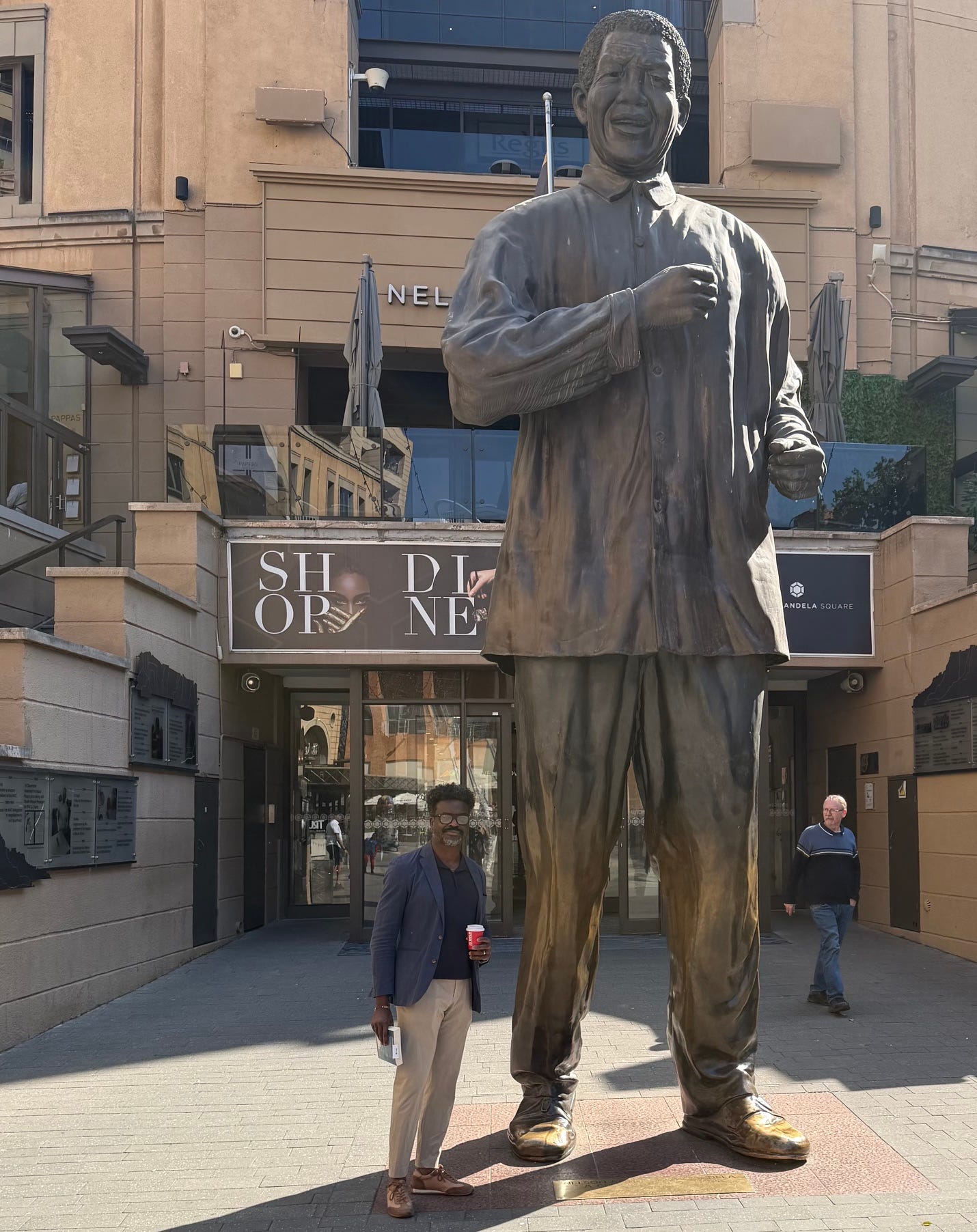
Celebrating this milestone in Nelson Mandela Square felt like a profoundly fitting conclusion. It was a journey that took me straight back to my roots—to my first home.
The theme of an arduous return home has felt especially resonant lately, with the massive cultural resurgence of The Odyssey following Christopher Nolan’s latest film release. Like Odysseus, a writer’s journey toward the final page is a winding, multi-year voyage across borders. But the true revelation is realizing how the journey itself reconstructs the traveler. Finding home—writing “The End”—requires surviving the space-and-time of crafting, revising, solving problems, facing fears, sharing with others, in order to understand truly what home actually means for you.
I know the next phase of this publishing adventure will be a roller coaster, but for now, I am satisfied, grateful, and ready to embrace whatever it holds. I am not quite home yet, but I am letting the journey prepare me for when I get there.
I am also thrilled to share that a standalone chapter from the novel, titled “Of Dust More Than Eros,” will be published in The Carolina Quarterly later this summer. I am excited to share a preview of the book and its characters with you all very soon!
Agency, Automation, and the Echoes of Soweto
While in South Africa, I also had the opportunity to present on Student Agency and Writing in the Age of Automation. In an upcoming post, I’ll be sharing an abridged version of my transcript and key talking points for those interested in how I think about teaching writing.
However, the true weight of my talk—which focused on the crisis of human agency in an extended age of automated voice and thought through AI and algorithmic echoing—was brought into even sharper relief by the conference’s keynote speaker, Seth Sandile Mazibuko.
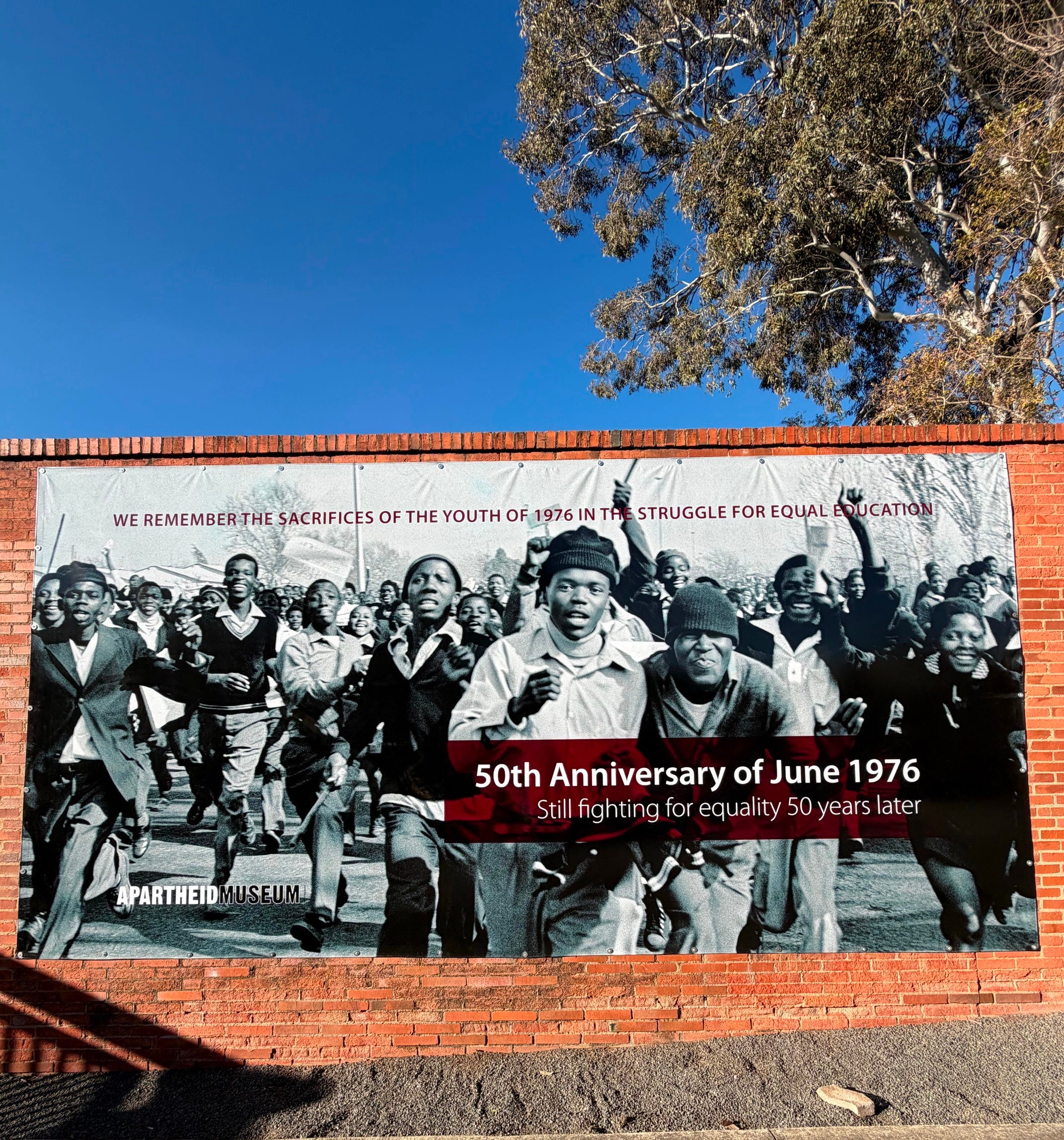
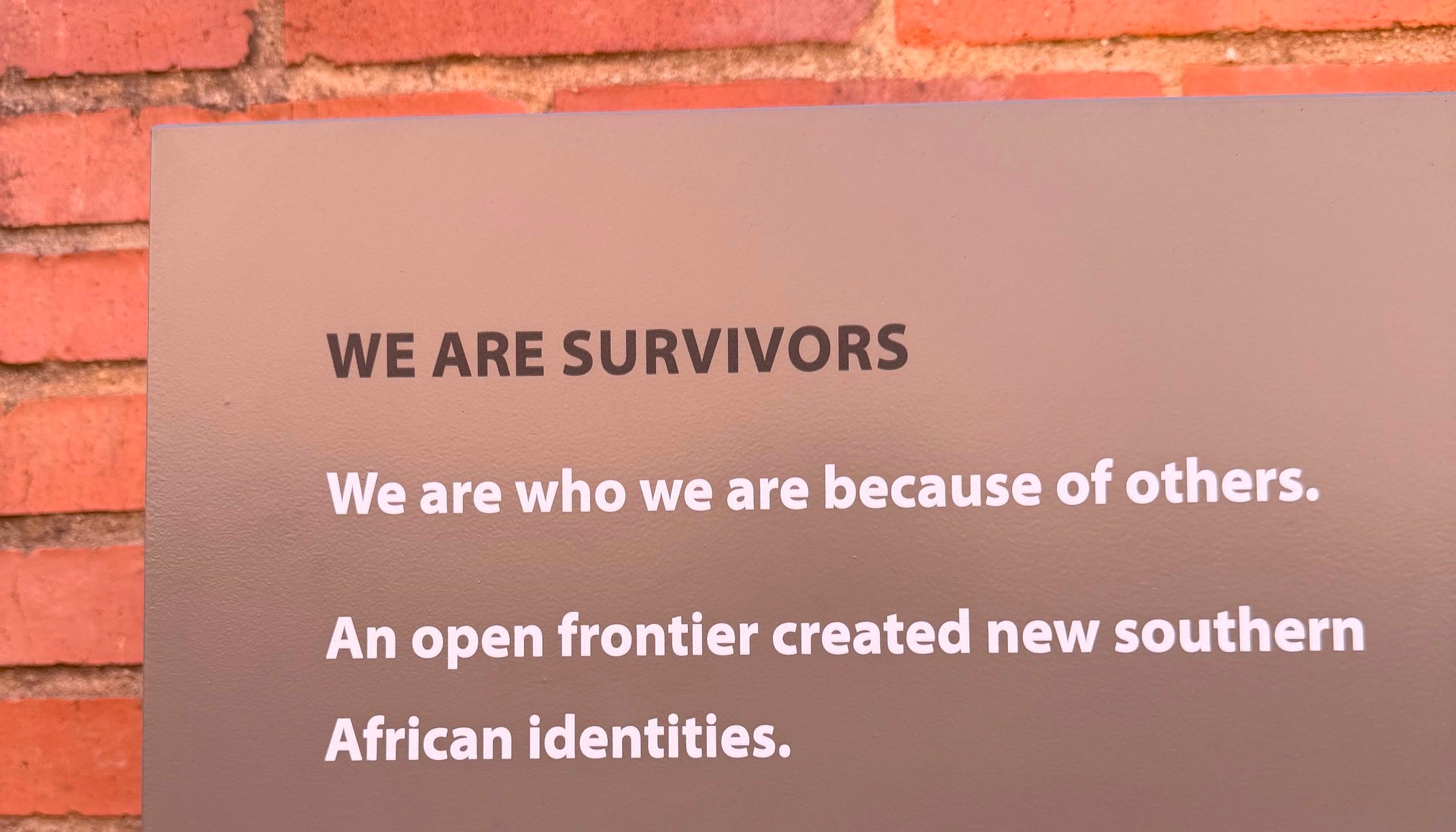
Mazibuko kicked off the conference by reminding us that this year marks the 50th anniversary of the Soweto Student Revolts. The revolts were the result of students rejecting the forced Afrikaans language instruction in their schools, in addition to the unequal education, and a deep, righteous anger against apartheid. They would no longer sit and let their voice be marginalized.
Hearing Mazibuko speak was a humbling, solemn experience. At just 15 years old, he was a central figure in the revolt. He witnessed over 150 of his classmates shot and killed, and was subsequently imprisoned on Robben Island alongside Nelson Mandela for seven years, including 18 excruciating months in solitary confinement.
Listening to his speech provided an even more urgent context for the importance of human agency. The young people of the Soweto Student Revolts literally gave their lives for their agency, and it served as a stark reminder of what is truly at stake when we talk about voice, freedom, and self-determination.
Summer Reading for Fun and for Teaching
When I wasn’t wrestling with my own manuscript across the finish line, I was diving into summer books, some for my comps and some for upcoming classes.
1. Flesh by David Szalay
I really enjoyed reading this book. While many critics have framed it as an exploration of contemporary masculinity, I saw it through a slightly different lens. Yes, it is about masculinity, but to me, Flesh is a brilliant study of a specific kind of character who lacks any real inclusion in a place, a man without a home.
The protagonist reminded me of Meursault from Albert Camus’s The Stranger. Istvàn is utterly detached, drifting through his life without any real, rooted social connection. Szalay is a masterfully shrewd storyteller who refuses to waste words or rely on flashy, heavy-handed figures of speech to move his narrative. The storytelling feels entirely naked: raw, vulnerable, and fiercely honest. It is stripped down to the absolute bones, making the title Flesh feel completely earned.
2. Audition by Katie Kitamura
Another book that completely captivated me was Audition by Katie Kitamura, which was the runner-up for the Booker Prize just behind Szalay. Like Szalay, Kitamura is an author who does not waste a single word. However, her narrative deploys that economy of language for the exact opposite purpose.
Audition is a book built entirely on radical interiority. It explores a fascinating psychological truth: how the mind accepts something as reality, and how that internal acceptance ultimately dictates the conditions under which we believe something to be true in the wider world. The story reads with the quality of a dream. As a notoriously slow reader, I usually take my time with fiction. Yet, I devoured this entire book in just four sittings. It is an incredibly fast, tense, and mind-bending read.
3. Vigil by George Saunders
For my flight to J-Burg, I picked up George Saunders’ novel, Vigil. Now, I absolutely love Saunders when he is talking about the mechanics of writing craft—his insights are usually standard-setting for writers. But with Vigil, I realized I don’t love the execution of his fiction in this story as much as I do his theories.
Where Flesh and Audition perfected the art of the novel by knowing exactly when to stay quiet, Vigil is the polar opposite to me. There were far too many digressions, meta-asides, and sweeps of incredibly chatty writing for me. The characters at times devolved into something bordering on the comical, which pulled me entirely out of the story's emotional weight. I hate to feel that way about a writer I respect so much, but contrasting it against the lean, sharp prose of Szalay and Kitamura made the stylistic differences hard to ignore.
4. The Adventures of Huckleberry Finn by Mark Twain
I have a whole separate set of notes for this re-read, which I absolutely hated and do not look forward to teaching. Yes, I am deeply disturbed by the relentless use of the N-word (220 times in a 295-page book). The excessive deployment of a slur—which was considered disturbing and excessive even by his editor in 1884—reflects what I critique not as “vernacular realism” (as Twain’s writing is so often labeled), but a Cabaret Realism that connects directly to Toni Morrison’s concept of “Africanism” in Playing in the Dark. (And yes, I am a little disappointed that Morrison herself defends Twain here, but more on that later).
Ultimately, I found the novel childish (especially the last third when Tom Sawyer returns), irresponsible, and racially pornographic. If you want to read white writers depict an injustice of Blackness in a literary way, see the restrained silence in the writing of Damon Galgut’s The Promise and all of Coetzee’s work. Twain’s Blackness isn’t even realistic, and his satire viewed from this side of history is merely histrionic, throwing haymakers at low-hanging fruit. Whew—ok, got that out of the way. More on that in a future post if I can stand to revisit it.
5. The Road by Cormac McCarthy
On a far better note, I also re-read The Road to prepare for teaching this school year, and oh, what a treat. McCarthy is doing so much more than constructing a dystopian story; he turns some of our biggest ideas and values completely inside out.
It is a story about love without hope, and religion without gods. McCarthy is clearly obsessed with questions of theodicy—where is God in all this suffering?—and nihilism—does life have meaning? What happens when nothing matters and all the gods are dead? The Road seems to answer: love, still. I am genuinely excited to teach this novel in the coming term.
6. Notes on an Execution by Danya Kukafka
Finally, I picked up a book that is looking like it will be my favorite read of the year. It uses an incredible narrative conceit: written in the second person, it places the reader inside the book. But rather than conventional second-person immersion into the text in general, it places the reader directly inside a character—Ansel Packer, a serial killer scheduled to be executed in twelve hours. This narrative device does more than what Susan Sontag calls “extending sympathies”; it transubstantiates those sympathies, almost like being held hostage in the person of Packer to do more than read his story, but be his story for the time being.
It is brilliant. I only started it two days ago, so I will report back when I finish, but so far I am completely hooked. (Her narrative conceit also mirrors an experiment with a short story I have been shopping and have contemplated making my next long-form project. So that’s another reason why reading this excites me.)
Upcoming Workshop: Read Short Stories with Me!
Looking ahead to the fall, I am excited to announce that I will be hosting another workshop for The Porch starting October 1.
This six-week course, titled Close Readings of the Truths of Realism in Literary Fiction: A Short Story Book Club for Writers, will examine how the invisible machinery of fiction generates what we will define as the story’s “Unit of Affect”—that unified emotional weight, literary conviction, and intellectual resonance that lingers long after the final sentence is read.
Together, we will analyze brilliant short fiction by James Baldwin, Edwidge Danticat, Albert Camus, Sandra Cisneros, Lauren Groff, and Kate Chopin. I will share the official promotional graphic as soon as it’s finalized, but mark your calendars in the meantime!
School starts back up for me next week. It has been a great summer. Talk soon.
Much love,
C.I.
So glad you had an adventurous and productive summer. Can't wait for the previews of your novel!